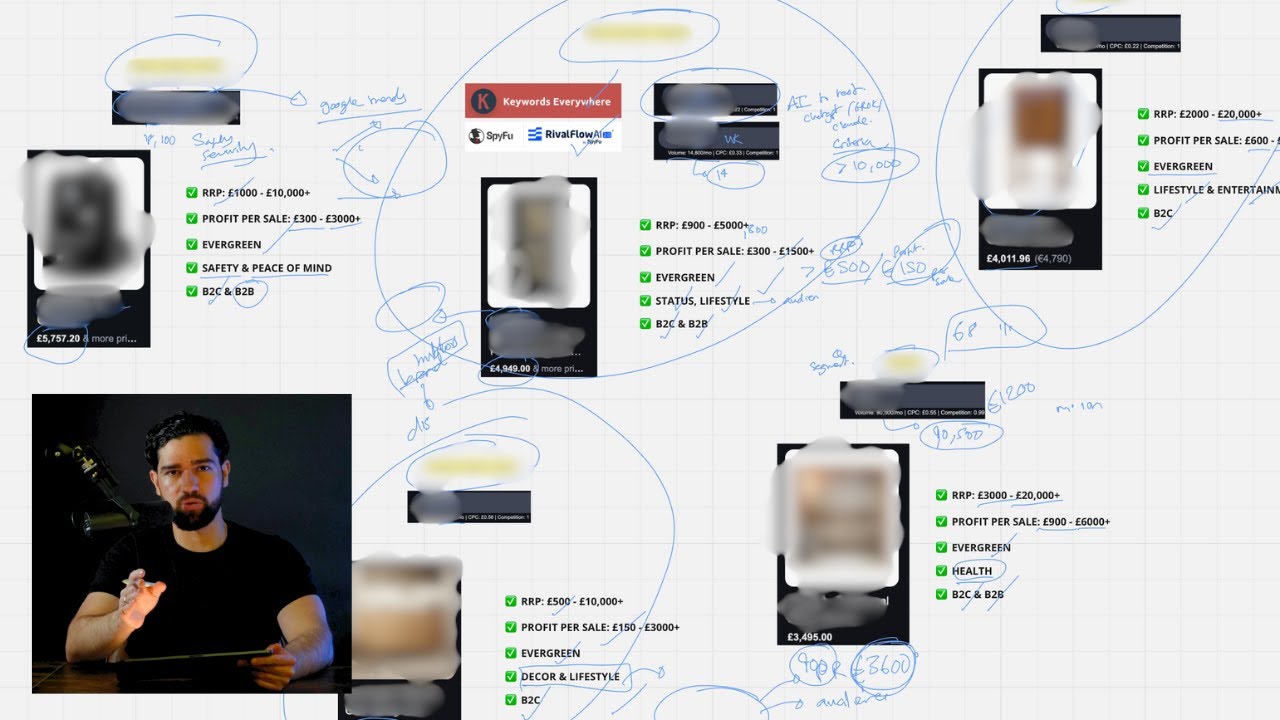
Profitable niches for dropshipping have demand, 25-40% gross margin, supplier depth and low avoidable return risk.
That is the boring answer. It is also the answer that keeps you alive.
Best niches: home improvement, garden/outdoor, fitness, commercial equipment and specialist hobbies.
I have spent years inside real ecommerce numbers, across my own stores and stores I have helped build. The biggest mistake I see is people choosing a niche because it looks exciting on TikTok, not because the unit economics work £-by-£.
This guide is not a list of magic products. It is how I would actually assess profitable niches for dropshipping if I were starting again: margin, demand, supplier depth, delivery complexity, after-sales risk and whether the customer is worth acquiring.
Profitable niches for dropshipping combine demand, 25-40% gross margin, reliable fulfilment, supplier depth and affordable customer acquisition. Strong examples include home improvement, garden and outdoor, fitness and wellness, commercial equipment and specialist hobbies.
What are the best profitable dropshipping niches to test first?
Test home improvement, garden/outdoor, fitness, commercial equipment and specialist hobbies first.
Here is the ranked shortlist I would investigate before chasing viral products:
Home improvement: high order values, clear buyer intent and problem-led purchases.
Garden/outdoor: strong seasonal demand and plenty of £500-£5,000+ product types.
Fitness/wellness: works better with substantial equipment than cheap accessories.
Commercial equipment: ugly, practical, often urgent and less driven by impulse trends.
Specialist hobbies: enthusiasts spend money, but you need real product understanding.
Best profitable dropshipping niches compared
Niche | Typical price | Margin potential | Difficulty | Main risk | Beginner suitability |
|---|---|---|---|---|---|
Home improvement | £500-£5,000+ | 25-40%+ | Medium-high | Trust, freight and installation expectations | Good if you build trust properly |
Garden/outdoor | £300-£5,000+ | 25-40%+ | Medium | Seasonality and bulky delivery | Good with timing discipline |
Fitness/wellness | £300-£3,000+ | 25-40%+ | Medium-high | Competition and health claims | Good if claims are controlled |
Commercial equipment | £500-£5,000+ | 25-40%+ | High | Specification, VAT, warranty and support | Better for serious operators |
Specialist hobbies | £300-£3,000 | 25-40%+ | Medium | Faking expertise kills conversion | Good if you can learn the niche |
If you want the deeper operating model behind larger order values, read the guide to high-ticket dropshipping. If supplier access is the weak point, start with how to get approved by high-ticket suppliers.
What makes a dropshipping niche profitable?
A profitable niche has demand, 25-40% gross margin, reliable fulfilment and affordable customer acquisition.
Most people look at revenue first. Operators look at what is left after the sale.
Take a niche that looks perfect on a spreadsheet and still fails. Say you pick standing desks: a £450 price, a healthy-looking 35% margin, obvious demand. Then the operating reality bites. They are heavy and bulky, so delivery surcharges run £40 to £70, couriers damage roughly one in twelve, and every damaged 30kg desk is a £90 round trip plus an angry customer. Because the niche looked obvious, every other beginner picked it too, so ad costs climb. That 35% margin is closer to 12% once the real costs land, and the support load is relentless. The niche was not wrong; the operating profile was.
If you sell a £1,200 garden sauna with a 35% gross margin, you have £420 gross profit before ad spend, card fees, returns, support and refunds. If you sell a £25 gadget with a 50% margin, you have £12.50 before the same problems turn up.
That does not mean cheap products cannot work. It means cheap products usually need volume, sharper creative and far more operational tolerance. High-ticket niches give you more room to breathe, but they also demand better suppliers, better sales process and better trust signals.
Here is the simple comparison I use when judging a niche:
How should I compare niche quality before choosing one?
Factor | Weak niche | Strong niche | Why it matters |
|---|---|---|---|
Product price | £15-£80 | £500-£5,000+ | Higher order value gives more room for ads and support |
Gross margin | Under 20% | 25-40%+ | Thin margin collapses when delivery or ads rise |
Supplier depth | 1-2 suppliers | 5-20 credible suppliers | More leverage and less dependence on one catalogue |
Delivery risk | Fragile, awkward, vague lead times | Clear freight process and tracking | Delivery problems eat margin quickly |
Return rate risk | Size/style/taste driven | Specification driven | Less emotional buying means fewer avoidable returns |
Customer urgency | Nice-to-have impulse | Solves a clear problem | Urgency improves conversion rates |
Support burden | Constant questions post-sale | Questions mostly pre-sale | Pre-sale support can increase conversion; post-sale support burns time |
I do not need a niche to be perfect. I need the weaknesses to be visible before I spend money.
For example, furniture can have decent order values, but it can be brutal on damages, delivery slots and customer expectations. Commercial catering equipment can be ugly as a website category, but buyers often know what they want and the spec matters more than the packaging.
Which profitable niches for dropshipping are worth considering?
Consider high-ticket, problem-led niches with £500-£5,000+ products and clear buyer intent.
I am deliberately saying “worth considering”, not “guaranteed winners”. A niche is not profitable because someone on YouTube says it is. It becomes profitable when your supplier terms, ads, conversion rate, fulfilment and customer support all line up.
Below are niche areas I would investigate before I bothered with most viral products.
Is home improvement a profitable dropshipping niche?
Home improvement can work because customers are often spending £500-£5,000 to solve a real problem.
Examples include bathroom fixtures, heating products, flooring accessories, garden rooms, saunas, storage systems and outdoor structures. These are not impulse buys, but they have intent. Someone searching for a specific size radiator cover or infrared sauna is closer to purchase than someone scrolling past a novelty lamp.
The trade-off is trust. If you sell a £2,000 pergola, your site cannot look like it was built in 45 minutes. You need clear lead times, UK or US delivery information, warranty pages, returns policy, supplier documentation and ideally phone support.
The margin can look healthy on paper, say 30% on a £1,500 order. But if freight costs are unclear, one failed delivery can wipe a painful chunk from that £450 gross profit.
Are garden and outdoor products good for dropshipping?
Garden and outdoor niches can work, but seasonality can swing sales by 30-70% depending on the product.
Good sub-niches include greenhouses, sheds, outdoor kitchens, pizza ovens, hot tubs, saunas, planters, garden machinery and patio heating. The customer is usually buying an outcome: more usable space, entertaining, storage or comfort.
The main risk is timing. If you launch a garden furniture store in late summer, you may misread the niche because demand is already cooling. You need to plan stock feeds, supplier capacity and ad budgets around the season, not your personal motivation.
Named tools I would use here: Google Trends for seasonality, Google Keyword Planner for intent, and Meta Ads Library to see whether competitors are still advertising after the initial rush.
Can fitness and wellness products be profitable?
Fitness and wellness can work when products are substantial, spec-led and not cheap Amazon-style accessories.
Better examples include treadmills, rowing machines, squat racks, recovery equipment, massage chairs, cold plunge tubs and infrared saunas. A £1,800 massage chair at 30% gross margin gives £540 to work with before marketing and operating costs.
The downside is competition and claims. You must be careful with health language. Do not promise medical outcomes, fat loss or pain relief unless the supplier has compliant documentation and you understand the advertising rules.
This niche also needs strong comparison content. Buyers want to know “which model fits my height?”, “how loud is it?” and “what warranty comes with it?”. That is where a proper operator beats a thin AI-generated store.
Is commercial equipment a good dropshipping niche?
Commercial equipment can work because buyers often have clear budgets, urgent needs and specification-led intent.
Think catering equipment, salon furniture, workshop storage, office pods, warehouse racking, cleaning machines, commercial refrigeration and security products. A business buyer purchasing a £2,400 glasswasher is not browsing for entertainment. They need the right specification, delivery date and invoice.
The trade-off is complexity. You may need VAT handling, finance options, datasheets, installation guidance and phone-based selling. You will also deal with more practical questions: power supply, dimensions, compliance and warranty response times.
If you can answer those questions better than a generic marketplace listing, you can win business without being the cheapest.
Do specialist hobbies make profitable niches?
Specialist hobbies can work because enthusiasts spend £300-£3,000 on equipment they understand.
Examples include golf simulators, fishing kayaks, telescopes, music studio furniture, cycling storage, reptile enclosures, aquaponics kits, photography lighting and premium crafting equipment. The advantage is language. Enthusiasts use specific terms, compare specs and often know what separates a cheap product from a serious one.
The risk is that you cannot fake expertise for long. If the buyer knows more than your product page, conversion drops. You need manuals, comparison tables, FAQs, buyer guides and sometimes direct supplier training.
This is where distribution and customer ownership matter. When software and ads become easier for everyone to copy, the moat is often your audience, support and buying experience, not just the product feed.
Which dropshipping niches should beginners avoid?
Beginners should avoid fragile, low-margin, trend-led, legally sensitive and high-return niches.
A bad niche is not always obvious from the outside. It can show lovely revenue screenshots and still be miserable behind the scenes.
I have seen operators get seduced by categories where every order creates work: customers ask 14 questions, suppliers miss dispatch windows, returns are emotional and ad accounts hate the claims. That is not a business model; it is a support queue with a checkout button.
Here are the categories I would be cautious with:
What niche red flags should I look for?
Niche type | Why it looks attractive | The real problem |
|---|---|---|
Fashion | Big demand, visual products | Sizing, returns, taste, low loyalty |
Beauty supplements | High repeat-purchase potential | Claims, compliance, ad restrictions |
Cheap gadgets | Easy to source | Low margin, high competition, copycats |
Fragile decor | Good lifestyle imagery | Breakages, packaging, disputes |
Baby safety products | Emotional buyers | Liability, compliance, trust burden |
Branded electronics | High search volume | Tiny margins and warranty headaches |
Viral TikTok products | Quick demand spikes | Short shelf life and brutal competition |
If you sell a £39 gadget and pay £18 to acquire a customer, your maths is already tight. Add a £3 card/payment cost, a £5 refund issue and a supplier delay, and there is not much business left.
With high-ticket, the risks are different. A £2,000 order going wrong hurts more, but you usually have enough gross profit to justify better support, stronger supplier checks and careful logistics.
How do I validate a dropshipping niche before building a store?
Validate with demand, margin, supplier depth, delivery terms, competitor gaps and acquisition cost checks.
I would rather spend 2-3 days validating properly than 3 months trying to rescue a weak niche. The point is not to prove your idea right. It is to find the ugly parts early.
Here is a practical validation process I use. If supplier research is new to you, use this alongside free dropshipping supplier research and the supplier approval process for high-ticket suppliers.
Step 1: Is there buyer demand?
Start with search intent, not vibes.
Use Google Keyword Planner, Ahrefs, Semrush or even Google autocomplete. You are looking for product-specific searches like “6 person infrared sauna”, “commercial ice machine UK” or “wall mounted squat rack”, not just broad curiosity terms.
A niche with 100 highly specific searches can be more useful than a broad term with thousands of vague searches. Commercial intent matters more than vanity volume.
Also check Google Shopping. If multiple retailers are paying for ads on the same product type, that usually tells you there is money moving somewhere. It does not prove profit, but it proves competition is willing to spend.
Step 2: Can the numbers survive paid traffic?
Build a simple margin model before you build a homepage.
Say you sell a £1,200 product at 32% gross margin. That gives £384 gross profit. Remove, for illustration, £25 in payment/processing costs, £40 in support or delivery variance, and you have £319 before ads and overhead.
If your customer acquisition cost is £180, there may be room. If it is £400, the model breaks unless you improve conversion, upsells, repeat purchase or supplier terms.
Do this on a spreadsheet. Not in your head. Optimism is much cheaper before launch than after your first £1,000 in ads.
Step 3: Are there enough suppliers?
I want more than one supplier unless there is a very good reason.
Look for 5-20 credible suppliers, brands, wholesalers or distributors in the niche. Check whether they offer trade accounts, MAP/pricing rules, product feeds, warranty handling, spare parts and clear delivery processes.
If the whole niche depends on one supplier answering your emails, that is fragile. A supplier can change terms, run out of stock, stop dropshipping or prioritise bigger accounts.
Call them if possible. A 10-minute phone call tells you more than a polished supplier page.
Step 4: Are competitors beatable?
Do not enter a niche just because competitors exist. Enter because you can see a specific way to be better.
Check their product pages, delivery pages, reviews, finance options, live chat, phone support, comparison guides, warranty language and Google Shopping presence. If everyone is terrible, there may be an opening. If everyone is excellent and cheaper than you, be careful.
Tools I would use include BuiltWith for platform checks, Meta Ads Library for creatives, Similarweb for traffic estimates and Trustpilot for complaint patterns.
Look for repeat complaints: “no delivery updates”, “impossible to contact”, “unclear warranty”. Those are not just complaints. They are positioning angles.
Is high-ticket better than low-ticket for dropshipping?
High-ticket is usually better for serious operators because £500-£5,000 products leave more room.
Low-ticket dropshipping is not impossible. But the economics are unforgiving unless you have excellent creative, fast testing, strong email/SMS retention and operational discipline.
High-ticket lets you win on advice, trust and specification. That suits UK and US buyers who are making considered purchases, comparing options and expecting a proper business behind the site. For examples of categories that fit this model, see high-ticket dropshipping products.
High-ticket vs low-ticket dropshipping: which is better?
Model | Typical product price | Main advantage | Main risk | Best suited for |
|---|---|---|---|---|
Low-ticket | £10-£100 | Easier impulse purchases | Thin profit after ads and refunds | Creative-heavy operators |
Mid-ticket | £100-£500 | Broader market, easier trust | Can still be margin-tight | Brand builders and bundle sellers |
High-ticket | £500-£5,000+ | More gross profit per sale | More trust and support required | Operators willing to sell properly |
For example, a £60 product at 40% margin gives £24 gross profit. A £1,500 product at 30% margin gives £450 gross profit.
That does not mean the £1,500 product is automatically easier. Conversion rate may be lower, the customer may want to speak to someone, and delivery mistakes cost more. But you have more economic oxygen.
This is why I generally prefer high-ticket ecommerce. It rewards proper product knowledge, supplier relationships and customer experience instead of just chasing the next viral angle.
How do profitable niches change with AI and new technology?
AI can create product demand in hardware, workflows, robotics, sensors and specialist equipment.
A lot of people talk about AI like the only opportunity is building an app. I think that is too narrow. When a major technology shift happens, value does not always accrue to the most technically impressive layer. Distribution, services, workflows and customer ownership can become more defensible than the core software itself.
For dropshipping operators, that means watching the physical supply chain around new technology. AI adoption can increase demand for chips, memory, sensors, robotics, devices, office equipment, training hardware, security products and specialist workstations.
I am not saying “sell AI gadgets” blindly. Most of those will become commoditised. I am saying look for boring physical products that support new workflows.
Examples worth researching:
Ergonomic office upgrades for AI-heavy desk workers, such as chairs, monitor arms and standing desks in the £300-£1,500 range.
Creator and studio equipment, such as lighting, sound treatment and camera rigs.
Robotics-adjacent components, storage, safety equipment and workshop furniture.
Business equipment for companies changing how teams work, including pods, acoustic panels and meeting room systems.
Security, access control and surveillance equipment where sensors and software are becoming more important.
There is a useful lesson from technology markets: a slow or failed consumer category can still create durable suppliers, IP and capability elsewhere. VR did not become what many consumer hype cycles promised, but technologies built around it helped form serious capability in other markets.
For ecommerce, that means do not only chase the shiny end-user device. Look at the picks, shovels, accessories, installation needs and business workflows around it.
How much margin do I need in a dropshipping niche?
Aim for 25-40% gross margin, with enough £ profit per order to absorb ads, fees and problems.
Percentage margin alone can mislead you. A 50% margin on a £20 product is £10. A 25% margin on a £2,000 product is £500.
What matters is contribution profit after the real costs of selling. That includes:
Payment processing and platform fees.
Google Ads, Meta Ads or marketplace costs.
Delivery variance and failed delivery charges.
Refunds, returns and replacements.
Customer support time.
Discounts, finance fees or promotional offers.
A simple example:
Item | Example amount |
|---|---|
Selling price | £1,500 |
Supplier cost | £1,000 |
Gross profit | £500 |
Payment/platform costs | -£35 |
Delivery issue allowance | -£50 |
Ad spend to acquire sale | -£220 |
Estimated contribution profit | £195 |
That £195 is not “money in your pocket”. You still have software, admin, bookkeeping, tax, refunds outside the allowance and your own time. But at least the model has oxygen.
Now compare that with a £49 product where you make £18 gross profit. There is very little room for a bad click, never mind a bad customer.
How long does it take to find a profitable niche?
Expect 3-6 months to find traction, but the timeline varies by niche, budget and execution.
Sometimes a niche validates quickly. Sometimes the first version of the store is simply not good enough. Sometimes the niche is fine, but the supplier terms are weak or your ads are attracting the wrong buyer.
I do not like the guru habit of pretending everything works in 30 days. You can build a basic store in a week. You cannot usually build trust, supplier use, conversion data and a proper acquisition system in a week.
A realistic early timeline might look like this:
Week 1-2: niche research, supplier conversations and margin modelling.
Week 3-4: store build, product pages, policies and tracking setup.
Month 2: launch Google Shopping/Search, test pages and fix obvious trust gaps.
Month 3: analyse conversion, supplier issues, customer objections and ad economics.
Month 4-6: improve winners, cut weak products, negotiate terms and expand content.
It varies. Budget, experience, niche complexity and supplier quality all matter.
The dangerous bit is quitting too early or persisting too long for the wrong reason. If the numbers show demand, margin and fixable conversion issues, keep working. If every sale is structurally unprofitable, stop romanticising it.
What is the best way to choose your first profitable niche?
Choose by scoring demand, margin, suppliers, delivery risk and your ability to build trust.
I like simple scoring because it removes some emotion. You are not marrying the niche. You are testing whether it deserves your time and capital.
Give each niche a score from 1-5 across the following:
Criteria | Score 1 | Score 5 |
|---|---|---|
Buyer demand | Hard to prove | Clear product searches and active advertisers |
Gross margin | Under 20% | 25-40%+ with healthy £ profit |
Supplier quality | Slow, vague, few options | Responsive, documented, multiple options |
Delivery complexity | Unclear, fragile, expensive | Clear process and trackable lead times |
Return risk | Size/taste/emotion driven | Spec-led and objective |
Competition gap | Strong incumbents everywhere | Weak pages, poor service or thin content |
Your credibility | You cannot explain the product | You can learn and advise properly |
A niche scoring 28/35 is worth serious investigation. A niche scoring 14/35 is probably a distraction.
The best first niche is not always the highest-margin one. It is the one where you can realistically become useful to the buyer. If you can explain the difference between 3 models, answer delivery questions and help someone avoid the wrong purchase, you have a commercial role.
That is where many thin dropshipping stores fail. They list products. They do not help anyone buy.
Key takeaways
Profitable niches combine margin, demand, supplier quality, low return risk and a buyer worth acquiring.
Profitable niches for dropshipping usually combine 25-40% gross margin, proven demand and low avoidable return risk.
High-ticket products from £500-£5,000+ often give more room for ads, support and delivery problems than low-ticket gadgets.
Home improvement, garden, fitness, commercial equipment and specialist hobbies are worth researching, but supplier quality decides a lot.
Avoid niches with fragile products, heavy compliance risk, fashion-style returns or tiny margins unless you know exactly what you are doing.
Validate with keyword data, competitor research, supplier calls and a written margin model before building the store.
AI and technology shifts can create demand for physical products around workflows, hardware, sensors, offices and specialist equipment.
Related reading
Use these guides to go deeper on high-ticket products, supplier approval and niche research.
Related reading
Frequently asked questions
These are the short answers operators need before choosing a dropshipping niche.
What are the most profitable niches for dropshipping?
The most profitable niches are usually high-ticket, problem-led categories such as home improvement, garden products, fitness equipment, commercial equipment and specialist hobbies. The niche still needs supplier depth, 25-40% gross margin and a buyer you can afford to acquire.
Is dropshipping still profitable in the UK?
Dropshipping can still be profitable in the UK, but not if you treat it like a quick product-flipping trick. UK buyers expect clear delivery times, proper customer service, VAT-aware pricing and trustworthy product pages, especially above £500.
How do I know if a niche is too competitive?
A niche is too competitive if you cannot find a clear way to be better on trust, advice, delivery, product range, finance, content or service. Competition itself is not bad; it often proves demand. The problem is entering with no angle.
Should I start with one product or a full niche store?
For high-ticket dropshipping, I usually prefer a focused niche store rather than a single-product store. A niche store lets you build comparison pages, supplier relationships, buyer guides and trust around a category instead of betting everything on one SKU.
What margin should I ask suppliers for?
As a rough target, look for 25-40% gross margin, but also calculate the £ profit per order. A 30% margin on a £1,500 product gives much more room than a 50% margin on a £30 product.
If you want to see how I think through high-ticket ecommerce properly: niche selection, suppliers, margins, store structure and paid traffic: I’ve put together free training at Dropship Circle. No hype, no income promises; just the operating logic I wish more beginners understood before spending money.