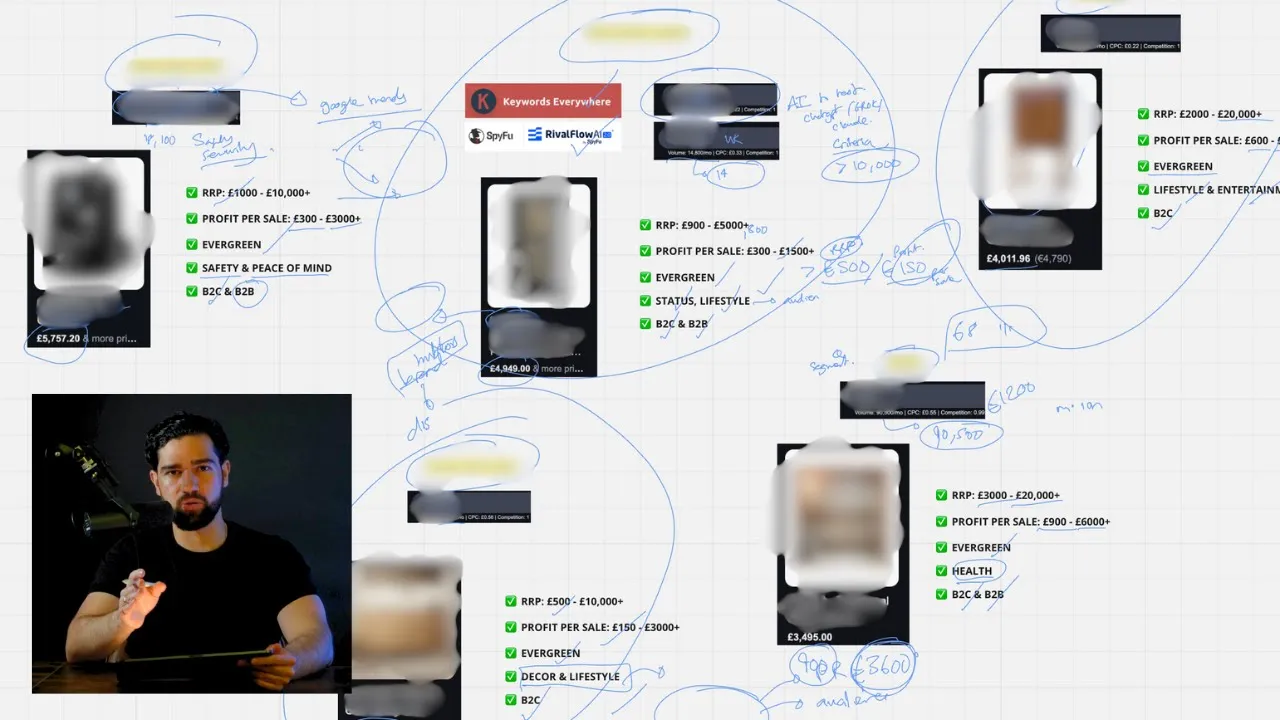
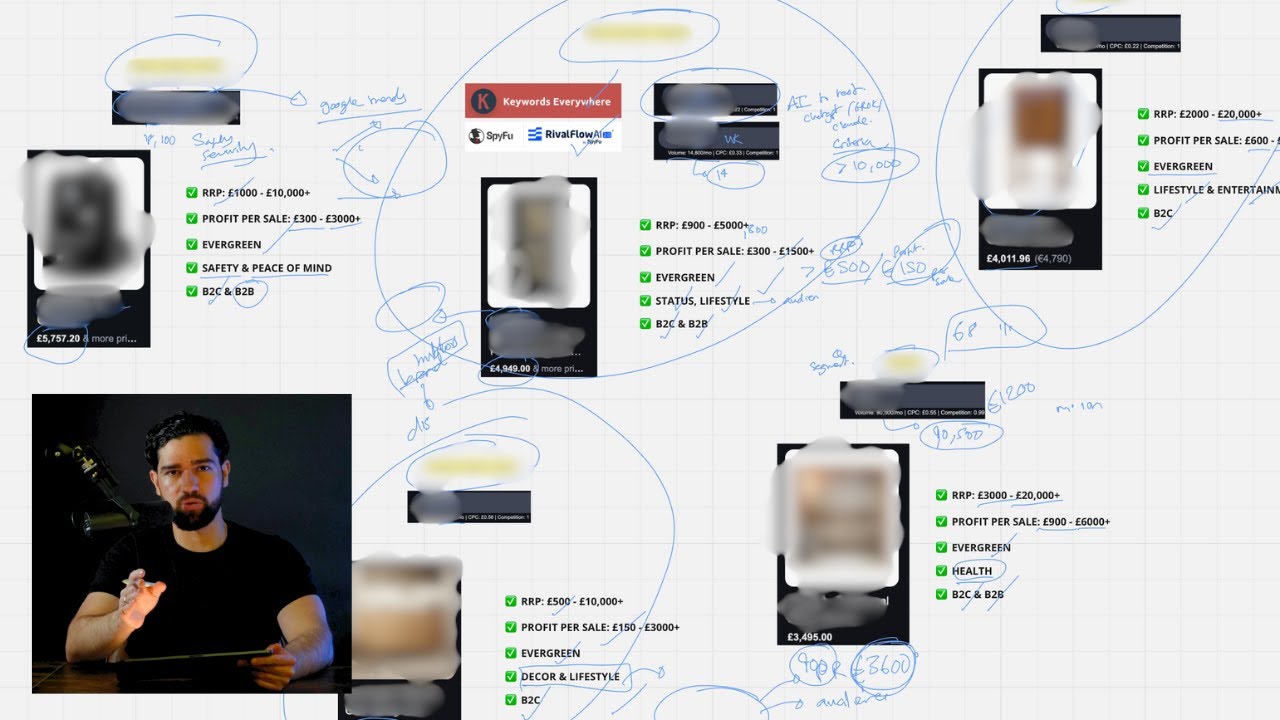
The best high ticket niches for 2026 include wine fridges, smart security, luxury vanity units, home bars, and saunas.
High ticket niches are where dropshipping stops being a cheap-gadget lottery and starts looking like an actual retail business.
Quick comparison
Five strong high ticket niches are wine fridges, smart security, luxury vanity units, home bars, and saunas.
Niche | Price range | Estimated net profit | Buyer type | Difficulty | Best traffic channel |
|---|---|---|---|---|---|
Wine coolers & fridges | £900 – £5,000+ | £300 – £1,500+ | Homeowners, restaurants, designers, developers, hospitality buyers | Medium | Google Shopping |
Smart home security systems | £500 – £6,000 | £300 – £2,000 | Homeowners, property managers, businesses, schools | Medium-high | Google Shopping |
Luxury vanity units | £500 – £10,000+ | £300 – £3,000 | Mid-to-high income homeowners, contractors, interior designers | Medium | Google Shopping |
Home bars | £1,000 – £20,000+ | £600 – £6,000 | Home buyers, hotels, restaurants, cafes, serviced apartments, hospitality spaces | Medium-high | Google Shopping |
Saunas | £3,000 – £20,000+ | £900 – £6,000 | High-income homeowners, gym owners, wellness centers | High | Google Shopping |
Best high ticket niche by operator type
Wine fridges suit beginners, smart security suits B2B operators, and saunas usually carry the highest order value.
Operator type | Best fit | Why |
|---|---|---|
Best beginner option | Wine coolers & fridges | Clear search intent, premium pricing, and manageable product education |
Best B2B option | Smart home security systems | Businesses, schools, landlords, and property managers can buy multi-unit systems |
Highest order value | Saunas | £3,000 – £20,000+ product range with home and commercial use cases |
Most technical | Smart home security systems | Buyers ask about wiring, recording, subscriptions, installation, and integrations |
Easiest content angle | Luxury vanity units | Style, dimensions, renovation guides, and bathroom design content are straightforward |
If you’ve been feeling stuck, burned by past e-commerce attempts, or unsure where to start, you’re not alone.
Most people get trapped in the same loop: low-ticket dropshipping, random “winning products”, weak suppliers, thin margins, slow delivery, and constant ad testing that goes nowhere.
Let me be clear: dropshipping still works, but not the way most people do it.
You do not need to sell hundreds of £15 gadgets just to make the numbers work. You need a better model. Higher order values. Branded products. Real suppliers. Search-based demand. Better margins per order.
In this article, I’m breaking down five high-ticket product niches that can carry £300–£3,000+ profit per sale depending on supplier terms, product mix, ad costs, and fulfilment setup, and I’ll show you how to validate them properly before you waste time building the wrong store.
Across £8.25M in tracked sales spanning own, student and client stores, the operating lesson is boring but important: validate demand, supplier access, delivery reality, and margin before you build.
These are not random product ideas. They are evergreen categories with real buyer intent, strong price points, and room for operators who can build trust.
The Problem with Traditional Product Hunting
Traditional product hunting fails when it chases novelty instead of demand, margin, supply, and buyer intent.
Most people approach dropshipping like this:
Search for a “winning product”
Use platforms like AutoDS, Oberlo, or Alibaba
Import it into a store
Run ads, cross fingers, and hope for conversions
That is not a strategy. That is gambling with extra steps.
Those platforms can work for certain models, but the problems are obvious:
Long shipping times
Razor-thin margins
Oversaturated product selections
Low-quality, non-branded items
No use
Weak customer trust
Poor repeatability
It becomes a race to the bottom.
The average low-ticket beginner thinks the product is the asset. It is not. The asset is the system: supplier relationships, search intent, conversion rate, fulfilment reliability, after-sales support, and margin control.
With low-ticket products, one bad refund week can wipe out progress. One delayed shipment creates support headaches. One competitor copies the product and drops the price. Then you are back scrolling product feeds at midnight trying to find the next shiny item.
That is why high-ticket dropshipping is different.
Instead of chasing £15 impulse products, you build around categories where customers already expect to spend serious money. They compare specifications. They care about warranties. They want delivery confidence. They want someone who looks like a real retailer, not a one-page store with a timer and a fake discount.
A proper high-ticket niche gives you:
Higher average order value
More room to pay for qualified traffic
Better supplier relationships
Fewer orders needed to create meaningful gross profit
More serious buyers
Better opportunity to build a brand around trust
The aim is not to sell everything. The aim is to become the obvious specialist for a defined product category.
Before choosing a niche, use this filter.
Filter | What you want | Red flag |
|---|---|---|
Product price | £500+ minimum, ideally higher | Mostly impulse buys under £100 |
Gross margin room | Enough spread for ads, fees, support, and profit | Margin too thin after delivery and VAT impact |
Search intent | Buyers searching specific product terms | Only viral demand or trend spikes |
Supplier quality | UK/EU-accessible brands, warranty, stock clarity | Anonymous suppliers and slow freight |
Product complexity | Enough detail to justify a specialist store | Commodity item sold everywhere |
Buyer type | Homeowners, businesses, designers, contractors | Bargain hunters only |
Shipping reality | Deliverable with clear process | Fragile chaos with unclear responsibility |
Now let’s get into the five niches.
1. Wine Coolers & Fridges
Wine fridges work because buyers search with intent and expect premium pricing, delivery, and product advice.
Keyword (UK): “Wine fridge” – 14,800 monthly searches
Alternate keyword: “Wine cooler” – 2,900 monthly searches
Why it works
Wine fridges are luxury lifestyle products with evergreen demand. Consumers buying these are not just grabbing the cheapest random unit they can find. They care about bottle capacity, temperature zones, noise level, installation type, dimensions, brand reputation, and delivery reliability.
That is exactly where a specialist store can win.
Price range
£900 – £5,000+
Net profit per sale
£300 – £1,500+
B2C and B2B potential
Yes: homeowners, restaurants, designers, developers, hospitality buyers.
This niche has both practical and emotional demand. Some customers are fitting out a new kitchen. Some are upgrading a home bar. Some are restaurants or boutique hotels needing proper storage. Some are collectors who want the wine protected, not just chilled.
The key is not to create another generic appliance store. That is weak positioning. Go specific.
Operator angles
Built-in wine fridges for kitchen renovations
Dual-zone wine coolers for red and white storage
Undercounter wine fridges for premium kitchens
Commercial wine fridges for restaurants and bars
Quiet wine coolers for apartments and open-plan homes
Your product pages should not be thin supplier descriptions. Add buying guidance:
How many bottles it holds in real use
Single-zone vs dual-zone
Freestanding vs integrated
Ventilation requirements
Delivery access questions
Warranty details
Noise considerations
Dimensions in plain English
This is where you beat lazy competitors. They upload a product feed and hope. You answer the buying questions before the customer asks.
Pro tip
Use tools like Keywords Everywhere and SpyFu to test alternative search terms and check for actual demand. One slight variation, like “wine fridge” vs. “wine cooler”, can 5x your potential traffic.
Also check the shopping results manually. If page one is full of major retailers, that does not automatically mean avoid it. It means sharpen the angle. A specialist store with better filters, better product education, and strong supplier terms can still compete, but not by being vague.
2. Smart Home Security Systems
Smart security sells because buyers already feel the problem and search for a trusted solution.
Keyword: “Home security camera” – 18,100 monthly searches
Why it works
Security is an evergreen concern. Homeowners, property managers, small businesses, schools, offices, and landlords all need reliable protection. The products are practical, high-consideration, and often bought as systems rather than single items.
Market researchers like Statista and Grand View Research continue to describe smart home and security as growing global categories into 2026, driven by connected devices, monitoring, and home automation.
Price range
£500 – £6,000
Net profit per sale
£300 – £2,000
Evergreen
Yes.
Audience
Homeowners, property managers, businesses, schools.
The strength of this niche is order composition. A buyer may need cameras, recorders, sensors, smart locks, monitors, mounting equipment, and sometimes multiple units for different areas of a property.
That creates higher basket value and more product bundling opportunities.
But you need to be careful with positioning. Do not make exaggerated safety claims. Do not promise a product will stop crime. Sell the real benefits:
Monitoring
Deterrence
Alerts
Visibility
Access control
Peace of mind
Integration with smart homes
Evidence capture where applicable
Good category segmentation matters here.
Examples:
Wireless home security camera systems
Outdoor CCTV kits
Smart doorbell and camera bundles
Commercial security camera systems
Multi-camera systems for landlords
Security systems for schools or offices
The buyer journey in this niche is detail-heavy. People want to know:
Is it wired or wireless?
Does it record locally or to the cloud?
Does it work at night?
Is there a subscription?
Can it be installed without a professional?
Is it weatherproof?
Does it integrate with existing devices?
How many cameras are needed for a property?
If your store answers those questions clearly, you immediately separate yourself from the copy-paste stores.
Operator angles
Many of these systems are bought in bulk, such as 3–10 units per order. That creates potential for larger single-invoice sales, depending on buyer need and supplier terms.
Operator note: this niche can attract support questions. That is not a reason to avoid it. It is a reason to build strong pre-sale content, supplier-backed technical information, and clear post-purchase documentation. High-ticket operators do not hide from complexity. They monetise clarity.
3. Luxury Vanity Units
Luxury vanity units work because renovation buyers want style, trust, dimensions, and delivery confidence.
Keyword: “Vanity unit” – 27,100 monthly searches
Why it works
Luxury bathrooms are still a strong home-improvement category. Renovation, interior design, lifestyle upgrades, new builds, and property development all feed demand for high-end vanity units.
Home-improvement and renovation reporting from sources like Houzz and Statista consistently shows bathrooms remain one of the major residential upgrade categories, which is why premium bathroom furniture keeps showing up in search-led demand.
Price range
£500 – £10,000+
Net profit per sale
£300 – £3,000
Evergreen
Yes.
Buyer type
Mid-to-high income homeowners, contractors, interior designers.
This is a strong niche because it connects visual desire with practical purchase intent. People want the bathroom to look expensive, but they also need the unit to fit, arrive safely, and work with the rest of the build.
A vanity unit buyer is rarely buying in isolation. They may also be considering:
Mirrors
Basins
Taps
Tall storage units
LED cabinets
Countertops
Matching furniture
Bathroom suites
That gives you room for bundles and accessories without turning the store into a messy general catalogue.
Operator angles
Partner with brands already featured in magazines or interior design websites. You become an authorised online retailer, leveraging their reputation and reach, no need to discount or compete on price.
This is where supplier selection matters. Cheap bathroom furniture can become a nightmare: damage, returns, missing parts, poor finishes, angry customers. High-ticket does not mean “expensive junk”. It means premium products with supply chain support.
Your product pages need to cover:
Exact dimensions
Wall-hung vs freestanding
Basin compatibility
Tap hole information
Soft-close drawers
Material and finish
Delivery method
Returns restrictions for made-to-order items
Installation notes
Lead times
This niche also has strong image-led selling. Use clean category pages, style filters, finish filters, and room-setting imagery where allowed by the supplier. A customer buying a premium bathroom product wants confidence. If your store looks rough, you lose before the cart.
A smart angle is to create buying guides by style:
Modern vanity units
Floating vanity units
Traditional vanity units
Double basin vanity units
Black vanity units
Oak vanity units
Compact cloakroom units
That gives Google more relevance and gives shoppers a cleaner route to the right product.
4. Home Bars
Home bars sell because they are aspirational, visual, high-value, and tied to lifestyle upgrades.
Keyword examples: “Home bar cabinet”, “Luxury drinks cabinet”
Why it works
More people are investing in better home entertainment spaces. Luxury home bars and drinks cabinets are both aspirational and functional. They are ideal for people upgrading spaces for hosting, relaxing, and making the home feel more premium.
Price range
£1,000 – £20,000+
Net profit per sale
£600 – £6,000
Evergreen
Yes.
Use cases
B2C home buyers, plus B2B hotels, restaurants, cafes, serviced apartments, and hospitality spaces.
This is a strong niche because it is not purely utilitarian. People buy these because they want the room to feel better. That changes the marketing.
You are not just selling storage. You are selling:
A focal point for entertaining
A premium finish for a lounge or games room
A gift-worthy luxury item
A design feature
A hospitality-style experience at home
Operator angles
Position the product around lifestyle, status, and convenience, people buy these not because they need them, but because they want them.
But do not make the beginner mistake of selling only the dream. High-ticket buyers still need details.
Your pages should answer:
Is it solid wood, veneer, metal, glass, or mixed material?
What are the dimensions?
Is assembly required?
How is it delivered?
Does it include lighting?
How many bottles or glasses can it store?
Is it suitable for commercial use?
What room styles does it match?
Are there matching furniture pieces?
This niche also gives you content opportunities competitors usually ignore:
Home bar cabinet buying guide
Drinks cabinet vs home bar unit
Best luxury drinks cabinets for small spaces
Home bar ideas for dining rooms
Bar furniture for hotels and serviced apartments
A good store in this category should feel curated. Do not dump 600 unrelated furniture items into one category. Organise by:
Bar cabinets
Drinks cabinets
Bar carts
Full home bar units
Commercial bar furniture
Wine and glass storage
Luxury entertaining furniture
The more premium the product, the more trust signals matter: reviews, delivery clarity, supplier brand story, contact details, payment options, and real support.
5. Saunas
Saunas work because wellness buyers accept premium pricing and compare features before purchasing.
Keyword: “Home sauna”, “Infrared sauna” – 90,500+ monthly searches
Why it works
Health, wellness, and recovery remain powerful buying drivers. Saunas are no longer reserved for spas and gyms. People are installing them at home as part of a broader wellness routine, while commercial buyers add them to gyms, hotels, recovery studios, and wellness centres.
Wellness economy research from the Global Wellness Institute and market coverage from firms like Grand View Research continue to point to strong consumer spending around wellness, recovery, and home health-adjacent products into 2026.
Price range
£3,000 – £20,000+
Net profit per sale
£900 – £6,000
Target audience
High-income homeowners, gym owners, wellness centers.
Scalability
Very high.
This is one of the strongest high-ticket niches because the product value is obvious. It has status, utility, wellness appeal, and commercial use cases.
But it is also not a niche for lazy operators.
A sauna buyer needs education. They are comparing:
Infrared vs traditional sauna
Indoor vs outdoor sauna
One-person vs multi-person units
Power requirements
Installation complexity
Wood type
Heat-up time
Maintenance
Warranty
Delivery access
Commercial suitability
If your store cannot answer those questions, you will lose to someone who can.
Operator angles
These are sometimes bought in sets for commercial properties. One client may buy three or more units, creating larger invoice potential when the use case fits.
The best angle is to split the market cleanly:
Home infrared saunas
Outdoor garden saunas
Commercial saunas
Compact indoor saunas
Luxury wellness suites
Cold plunge and sauna bundles where supplier terms allow
You also need tight delivery communication. Big, heavy products create friction. Customers want to know what happens after they buy. Who contacts them? How long does delivery take? Is kerbside delivery standard? Is installation included or separate? What happens if access is difficult?
Answer it before checkout. That reduces abandoned carts and support chaos.
Do not overclaim health outcomes. Sell the category responsibly. Talk about wellness routines, relaxation, recovery culture, and premium home upgrades. Avoid medical promises unless backed by supplier-approved, compliant wording.
How to Validate a High-Ticket Niche Before Building
Validation means checking demand, margins, suppliers, ads, and fulfilment before committing to the store.
Do not build a store just because a niche sounds attractive. That is amateur behaviour.
Before committing, run the niche through a proper validation sequence. If you want the deeper version, use the niche validation process before you touch the store build.
Step 1: Check search demand
Use tools like Keywords Everywhere, Google Keyword Planner, SpyFu, and manual Google searches.
Look for:
Main keyword volume
Long-tail buyer keywords
Shopping results
Search ads
Product listing ads
Competitor depth
Price range on page one
Strong signs:
People search specific product types
There are advertisers already spending
Products are priced above £500
There are multiple suppliers or brands
Search results show commercial intent
Weak signs:
Only informational searches
No shopping ads
Products are mostly cheap
Demand depends on a short trend
Suppliers are hard to verify
Step 2: Check supplier reality
A niche is only as good as the suppliers behind it.
Ask:
Do they work with online retailers?
Do they support dropshipping or direct-to-customer fulfilment?
What are the margins?
What are the delivery times?
Who handles damage claims?
Is stock data available?
Are images and product data provided?
Are there MAP or pricing rules?
What warranty applies?
Are returns commercially viable?
Do not chase suppliers with weak communication. If they are slow before you send customers, they will be worse after problems appear.
For outreach structure, use a proper supplier outreach process instead of sending lazy “do you dropship?” emails.
Step 3: Check unit economics
You need room for:
Product cost
VAT considerations
Payment processing
Google Ads
Returns and damage allowance
Customer support
Platform costs
Profit
High order value alone is not enough. A £3,000 product with no margin is useless. A £1,200 product with strong margin, reliable delivery, and clear demand can be better.
Step 4: Check conversion obstacles
High-ticket buyers hesitate. Your job is to remove friction.
Common blockers:
Unclear delivery dates
Weak product images
No phone number or support route
Poor warranty explanation
No finance or payment flexibility where applicable
No reviews or trust signals
Confusing returns policy
Thin product descriptions
Fix these before blaming ads.
How to Sell These Products Without Social Media Ads
Google Shopping works because it captures buyers searching for the exact product category already.
Most dropshippers run their business on:
TikTok Ads
Facebook/Instagram
Interruption marketing
That is not how we do it.
We use Google Shopping Ads because the intent is different.
You are not interrupting someone watching videos. You are appearing when someone searches for the exact product type you sell.
Industry benchmarks from firms like IRP Commerce and WordStream consistently put ecommerce conversion rates in the low single digits, which is why high intent, margin, and feed quality matter.
Here’s why it works:
You show up when someone searches for the product
These customers already have intent to buy
You only pay when someone clicks
There’s no need to create content or be the face of the brand
It is scalable when the numbers work
It gives cleaner data than guessing on social trends
Google Shopping is not magic. It needs clean execution. Start with the Google Shopping ads fundamentals before scaling spend.
You need:
Accurate product titles
Strong product images
Clean Google Merchant Center setup
Correct shipping settings
Competitive but profitable pricing
Conversion tracking
Negative keyword management
Product-level performance review
Landing pages that match buyer intent
The beginner mistake is treating all products equally. Do not do that.
Some products get clicks but no sales. Some have good margins but low search volume. Some convert well but have delivery headaches. You need to manage campaigns like an operator, not a button-clicker.
Segment products by:
Margin
Price range
Brand
Category
Search volume
Conversion data
Delivery reliability
Then cut waste, push winners, and refine the feed.
Illustrative Google Shopping Scenario
This example shows how the maths can work; it is illustrative only, not a promised result.
£300 invested in Google Ads
Average CPC: £0.50
600 clicks to your store
1.5% conversion rate = 9 sales
Average order value: £1,000
Gross revenue: £9,000
Gross profit at 30%: £2,700
Subtract ad cost: £2,400 before other operating costs
That is the appeal of the model: higher order values give you more room to buy traffic, test, and still have a viable margin structure.
But do not be naive. Real stores also need to account for:
Payment fees
Refund allowance
Damaged goods
Customer support time
Software
VAT/accounting treatment
Supplier lead times
Failed delivery costs
The point is not that every campaign prints money. The point is that a high-ticket model gives you enough gross margin per sale to operate like a real business.
Low-ticket dropshipping often leaves no room for mistakes. High-ticket gives you room to improve, provided the niche, supplier, and traffic economics are solid.
High ticket drop servicing niches
The best high ticket drop servicing niches are specialist services tied to expensive products, such as wine fridge installation, smart security setup, bathroom fitting, home bar installation and sauna assembly. These work because the customer already expects technical checks, delivery coordination and professional installation alongside a £500 to £20,000+ purchase.
Do not sell a vague service and scramble for a freelancer afterwards. Pick one defined outcome, document the scope, then agree pricing, availability, insurance requirements and responsibility for faults with a reliable UK contractor. For smart security, that might mean a site survey, installation and system setup. For vanity units, it could cover removal, plumbing and fitting, with electrical work excluded unless separately quoted.
Price the service using the contractor’s quote, your support time, payment fees and a contingency for return visits. Confirm the customer’s postcode, access, dimensions, utilities and installation conditions before taking payment.
The downside is operational risk. Missed appointments, poor workmanship and unclear liability damage your reputation even when a subcontractor caused the problem. It depends on local contractor coverage, job complexity and whether the product supplier permits third-party installation. Start with one region and one tightly scoped service before expanding.
Register to watch the free training →
FAQ
High ticket niches are product categories with higher order values, real buyer intent, and enough margin room to operate properly.
What are high ticket niches?
High ticket niches are categories where products usually sell at higher prices, often £500+, and buyers expect trust, detail, and service. Examples include saunas, wine fridges, vanity units, home bars, and smart security systems.
What is a good profit margin for high-ticket dropshipping?
A good margin depends on the niche, supplier terms, delivery cost, VAT treatment, ads, and returns risk. The real test is whether the margin still works after traffic, fees, support, and fulfilment costs.
Which high ticket niche is best for beginners?
Wine fridges and luxury vanity units are often cleaner starting points because buyers search with clear intent and product education can create an edge. Smart security and saunas can work too, but they usually demand stronger technical support and delivery handling.
How do you validate a high ticket niche?
Validate demand, supplier access, margins, delivery reality, ad competition, and conversion obstacles before building the store. If the numbers or suppliers do not hold up, move on.
Are high ticket niches still profitable in 2026?
High ticket niches can still be profitable in 2026 when demand, margins, suppliers, traffic costs, and fulfilment are managed properly. The niche alone does not make it work; the operating system does.
Do you need social media ads for high ticket niches?
No. Google Shopping can be a better fit because it captures people searching for the exact product category already. Social ads can work, but search-based intent is usually cleaner for high-consideration products.
What’s Next?
The next move is to validate one niche properly, speak to suppliers, and build around buyer intent.
If you're serious about building a real e-commerce business without the burnout, distractions, or constant product-hunting, here’s what to do:
Watch the Free Training
Head to Dropship Circle and register. It’s in-depth, practical, and shows the high-ticket dropshipping model in more detail.Book a Free Strategy Call
Once you’ve watched the training, you can book a free strategy call with me or a member of my team. We’ll help you map out your plan, review your niche thinking, and determine if we’re the right fit.Stop Hesitating
Most people watch videos, read articles, and then do nothing. Do not be the person still sitting behind your laptop collecting information while never building anything.
We’re not a high-volume program. We work closely with a small number of students to mentor them personally.
The model is simple, but not lazy: choose a strong niche, secure real suppliers, build a trustworthy store, run search-based traffic, and manage the numbers like an operator.
Build around products that can create £300–£3,000+ profit per sale depending on the niche and supplier terms. No hype. No income-on-autopilot pitch. Just a cleaner business model than selling disposable gadgets to bargain hunters.
If this article helped, let me know in the comments below, and subscribe to the YouTube channel for more breakdowns like this.
Lex
Founder, Dropship Circle